
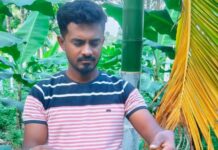
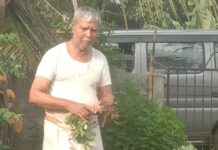



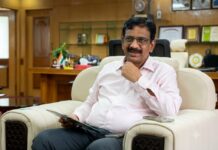
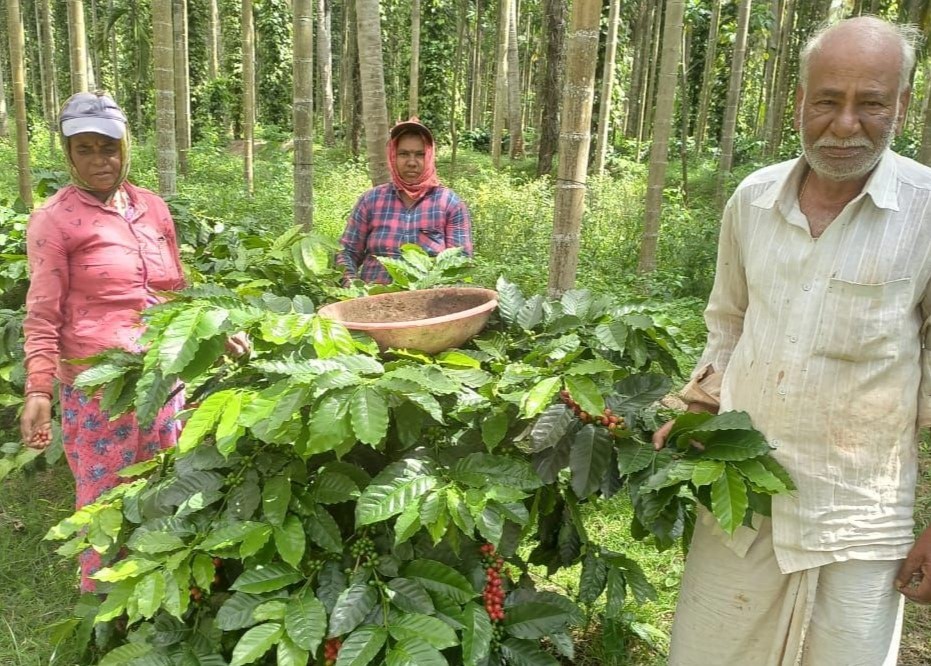
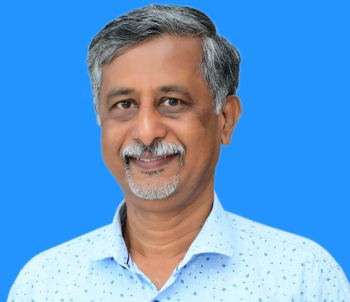
In agriculture, first a smile of peace should be brought to the face of the farmers; only then will there be meaning. This has been achieved by Mallaraje Urs. Here is a detailed article written by senior journalist H.S.Sachith about farmer achievement.
Mallaraje Urs, a science graduate who has shown a penchant for horticulture for economic self-reliance, is conducting integrated horticulture in his 20 acres of land in four phases. Through this, he earns an average of 20-25 lakh rupees every year. He has made a comfortable life his own
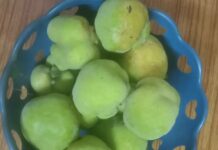
Mallaraje Urs is originally from Mandya district. 25 years ago, he bought 20 acres of land in Devagalli village, a bordering part of Hunsur taluk. He took up horticulture step by step. Initially, he planted and cultivated 500 coconut saplings. Gradually, more than 150 coconut trees were affected by black head worm and stem rot and felled. However, without giving up, sapota saplings were planted in the places of the fallen trees and nurtured. Now a rich sapota garden has been built there.
Four-stage farming:
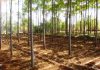
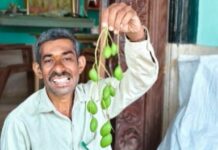
Mallaraje Arasu observes every aspect of agriculture from a scientific perspective. Due to this, he cultivates horticultural crops in four stages. There are commercial crops such as 350 coconut trees, 2000 areca nuts, 80 sapota, Arabica, and moonflower coffee plants. He has grown Paniyur variety black pepper in 400 silver trees. He gives priority to organic and green manure farming. He gives chemical fertilizers in moderate quantities.
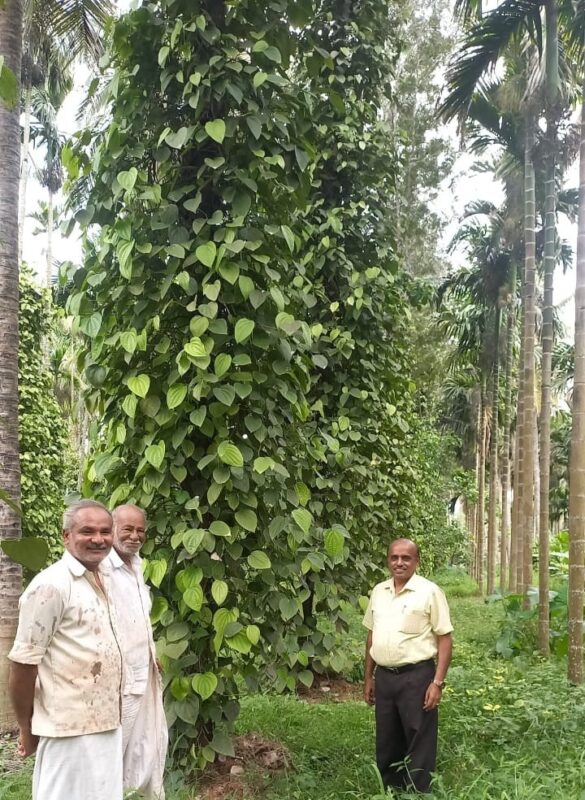 “I had the intention of doing complete organic farming. To overcome some deficiencies, I have to resort to fertilizers. Once a year, I give urea, potash and super fertilizer to the areca nut, coconut and coffee crops. Along with this, by giving neem husk and cow dung annually, the garden is disease-free. It always remains green,” said farmer Mallaraje Arasu.
Supply of Jeevamrutha:
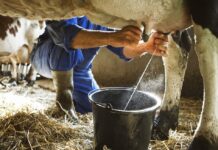
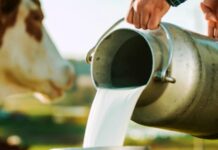
Arasu is raising indigenous breed cows that complement organic farming. He has 8 pairs of Hallikar and Baragur breeds of cows. Without giving much emphasis on dairy farming, he has adopted a system of processing the manure and dung from indigenous breeds and preparing life-sustaining nectar and giving 10 to 12 liters to each tree. There is a demand for indigenous breed milk. He sells 4 liters of milk daily. The money earned from this is being used for daily expenses, he said.
Income from integrated horticulture
In the 23rd-24th year, 20 lakh rupees were earned from integrated horticulture. 300 quintals of areca nut have been sold at Rs 60,000 per quintal, 20 quintals of peppercorns at Rs 9 lakh. Coconut, coffee and sapota have all been sold at good prices. I am using half of the money I earn for the maintenance of the plantation,” he says with a satisfied smile.
Mallaraje Arasu asserted that there is almost no loss if horticulture is done scientifically, that by growing various crops in a four-stage calculation, daily money can be earned, and that monoculture is not profitable for farmers.
There are many schemes for progressive farmers who do horticulture, including drip irrigation and financial assistance for coconut cultivation. If farmers take advantage of them, they can lead a comfortable agricultural life, said Nagaraj, Assistant Director of the Horticulture Department.